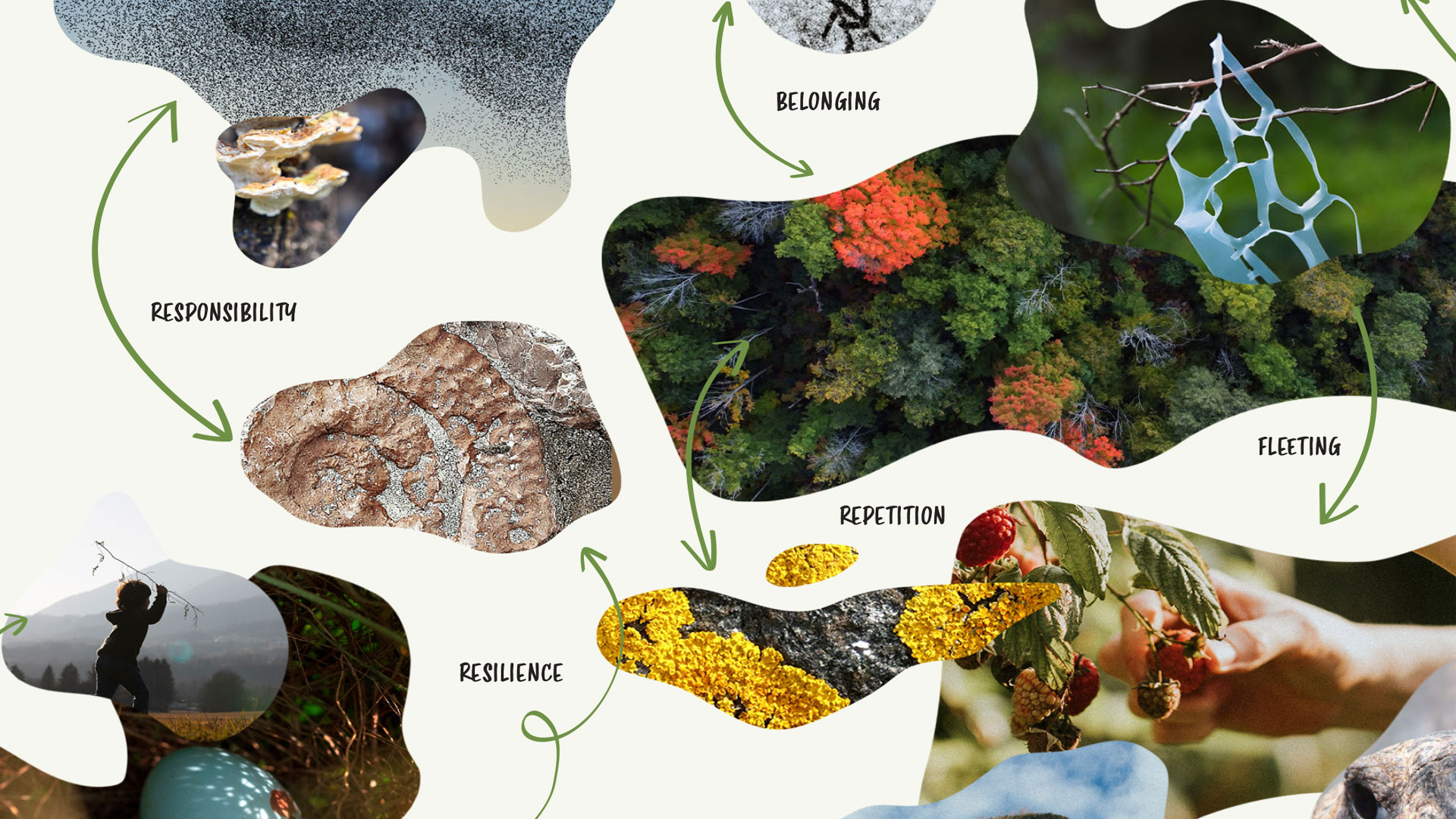
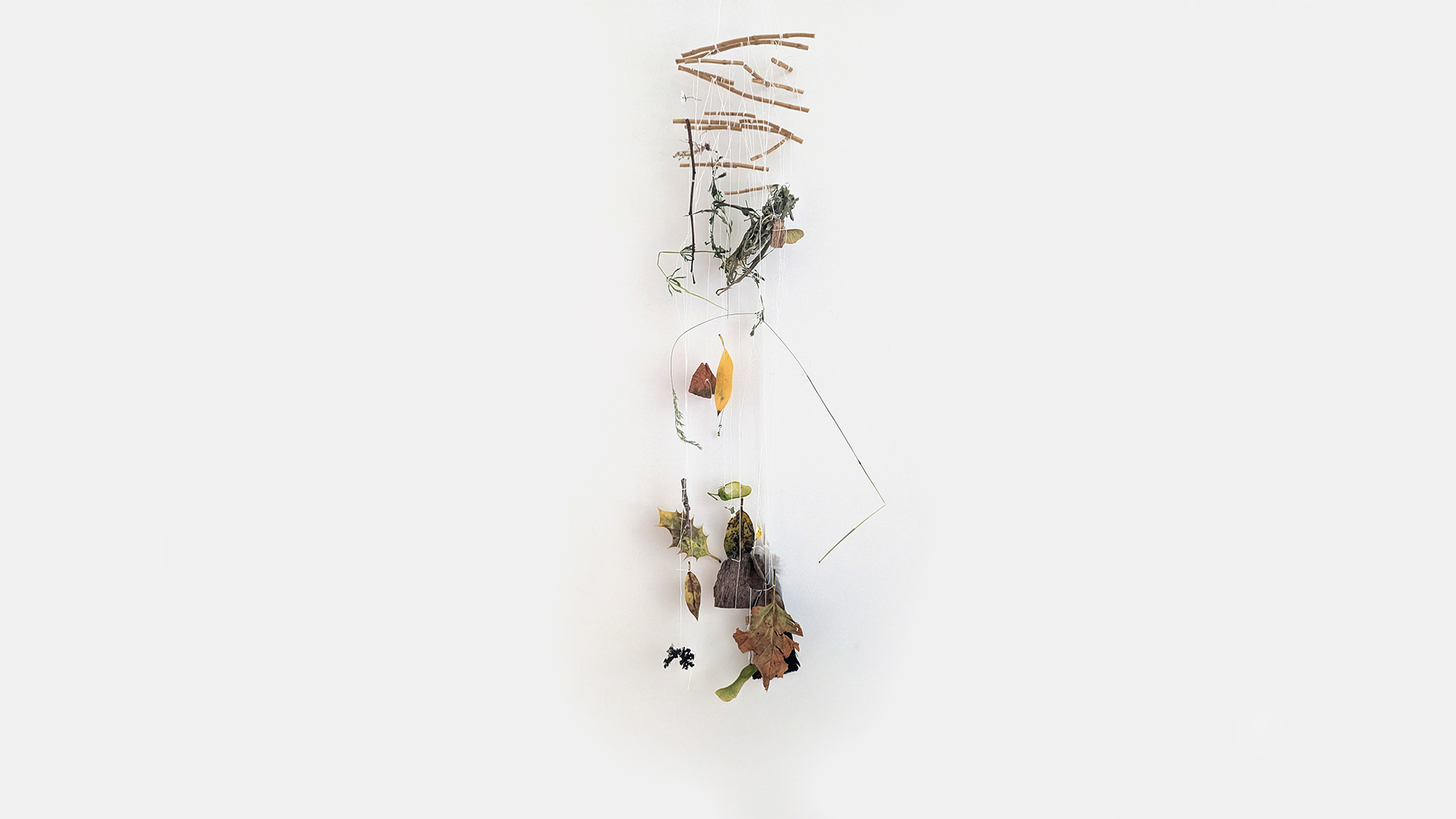
Powys White describes Kinship Time by what it isn't—it is not relationships shared by a small group of family members, but instead focuses on relationships grounded in responsibility, mutual guardianship and caretaking. Powys White draws from Melissa Nelson who describes Kinship in terms of the 'Mishipeshu', the force of nature to the environment and humans to diverse plants and animals. An exploration led by designer Mathilde Gouin with Daragh Byrne, Nuno Jardim Nunes, Keili Koppel and Valentina Nisi examined Kinship through three different booklets’ themes, each with examples and perspectives on MtH temporalities and Kinship Time. “Affinities”, which focuses on MtH and elements of nature people feel naturally drawn to and already appreciate. “Curiosity”: MtH elements people don’t know much about but are curious to find out, and MtH elements we don't pay much attention to: “overlooked”. Taking part in Gouin's exploration allowed me to explore the affinity booklet, which presented examples of potential affinities: “A mushroom like the one growing in your back garden every autumn” or “The river that has been running through your neighbourhood for the past 600 years”. Gouin invited participants to explore a nearby park, a reprise from the formality of a conference setting. Participants were prompted to sketch observations, engage with senses, and connect with one element. The booklet suggested choosing something from the landscape, staying mindful of the environment, leaving the ecosystem undisturbed and sticking to things already found on the ground. A buttercup became my focus but ultimately returned with a feather for fear of feeling guilty about picking a flower, needlessly. The booklet asked for a description to “describe your being as precisely as possible, their shape, colour, texture, sound, smell, movement and anything else that defines them”.... A buttercup is a game that gives everyone a yellow chin. After we worked our way through the prompts, we populated mobile structures with collections of bark, stone and natural materials. Mobiles were named collectively, and in a short time affinities were developed in relation to the non-human materials. It was nice to think more about the interconnection between each multispecies companion on the mobile and the entanglements between ourselves and the environment. We all shared the feeling that spending time with the MtH produced more inclination to care.
Fungal Time
Sarah Tarkhanian discusses how MtH is often automatically perceived as beneficial, inherently generating positive change because it is motivated by caring intentions. Tarkhanian believes this leads to coloniality and to counter this, more critical reflexivity is needed in the field. Alia Parker and Nina Williams presented a refreshingly realistic and non-sentimental look at the challenges that come from the incompatibility of human and non-human time. Williams and Parker's work brought to the fore the absurdity of mycelium's refusal to acknowledge design deadlines. Incommensurable durations: Fungal time and the limits of attunement in multispecies design discusses an existing piece of bio-design called Fruiting Home (Parker 2022). Rather than present a romanticised reflection where nature and humans become one in the design process, they point to feelings that might arise in biodesign practice such as "impatience" while waiting for something to grow, "frustration" if a mushroom won't fruit on time and the disappointment in a material that decomposes too quickly or changes colour in the light. They discuss pleasures too, things that emerge unexpectedly through the design process, but their work highlights difference.
Fruiting Home (2022) is a wearable garment designed by Alia Parker, a comment on the threat to food security that the current climate crisis presents. Constructed with biodegradable plastic and filled with post-consumer textile waste colonised by blue oyster mushroom mycelium. This is a piece of speculative design where "one might wear the sites of food production" (figure 1). Alia Parker and Nina Williams discuss the clashing rhythms of fungi time and production timelines in a commercial design setting. A fruiting chamber was developed with the organisers of the RawAssembly exhibition in Melbourne, so that large blue oyster mushrooms could be harvested for eating over the three-day event. The mycelium was slow to colonise, and the garment did not develop in time for the display. The event organisers were disappointed that "the fungi did not meet the expectations of timely executive growth".
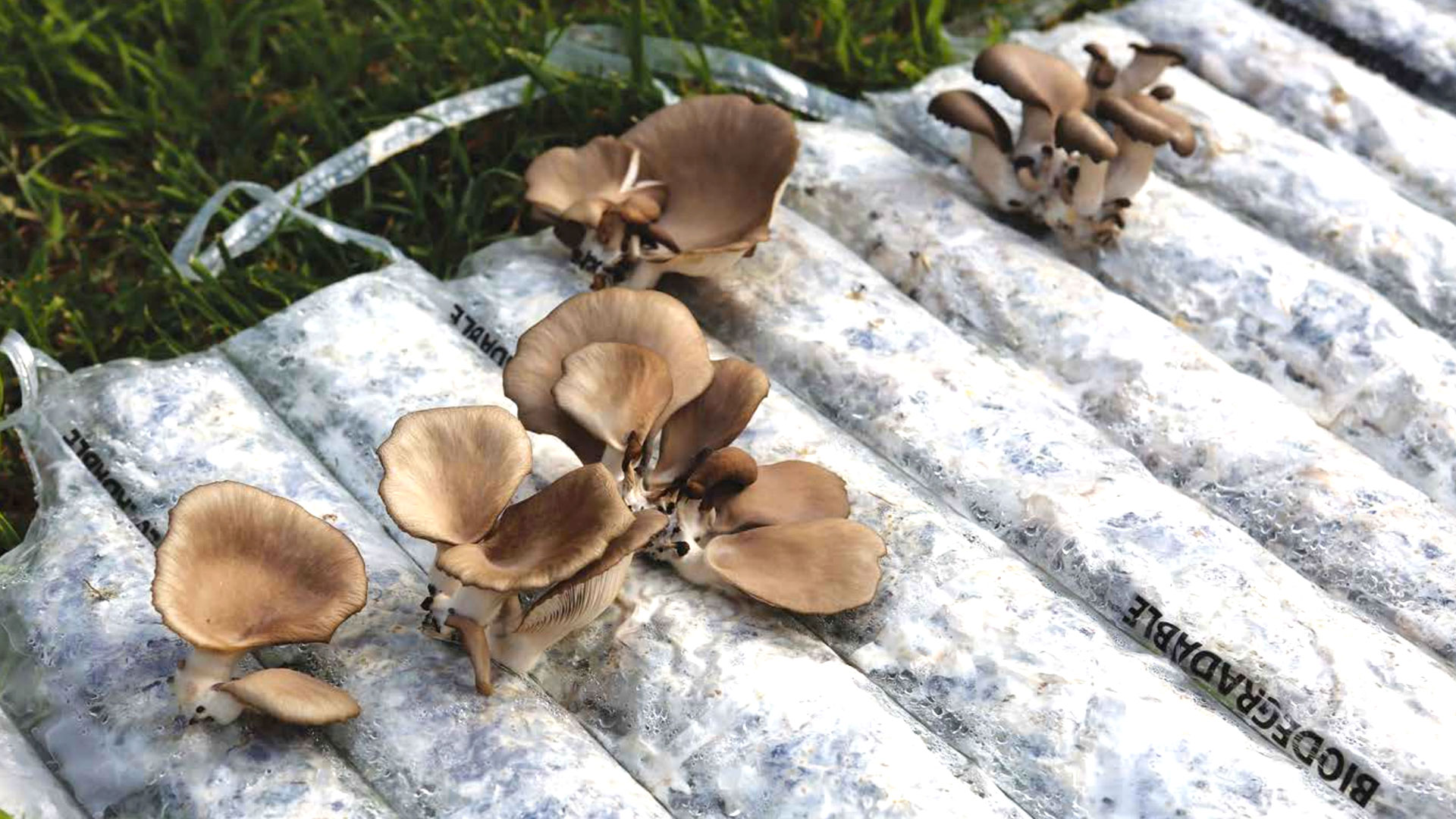
They packed the piece away, where it was couriered back to Canberra, sitting through winter temperatures in a cold, dark grow tent. The assumption was that the below-freezing temperatures would stop the growth but once opened in Spring, clouds of mycelial networks and the beginning of fruiting bodies appeared on the surfaces. With a second exhibition upcoming, the opposite problem occurred; instead of trying to speed up the mycelium, the task was to slow it down. This proved futile, and as clusters of mushrooms populated the garment, the mushrooms and garment were dried and sealed. Instead of producing edible mushrooms, mould and bacteria spread on the piece. Unfortunately, it turns out that risky multispecies growths are unwelcome in exhibition contexts.
Ecologies of time
In Materialising Ecologies of Intelligences: Learning to Design with and within more-than-human systems, Marianne McAra and Kirsy Ross discuss student work developed on the Masters programme, co-delivered by The School of Innovation and Technology (SIT) at The Glasgow School of Art (GSA) and innovation organisation NESTA. This research examines what it means to engage in academic-industry-community collaboration and design with multiple intelligences. The context of equitable energy transitions is pertinent, positioned against the increasing technological transformation of the design field that graduates are entering.
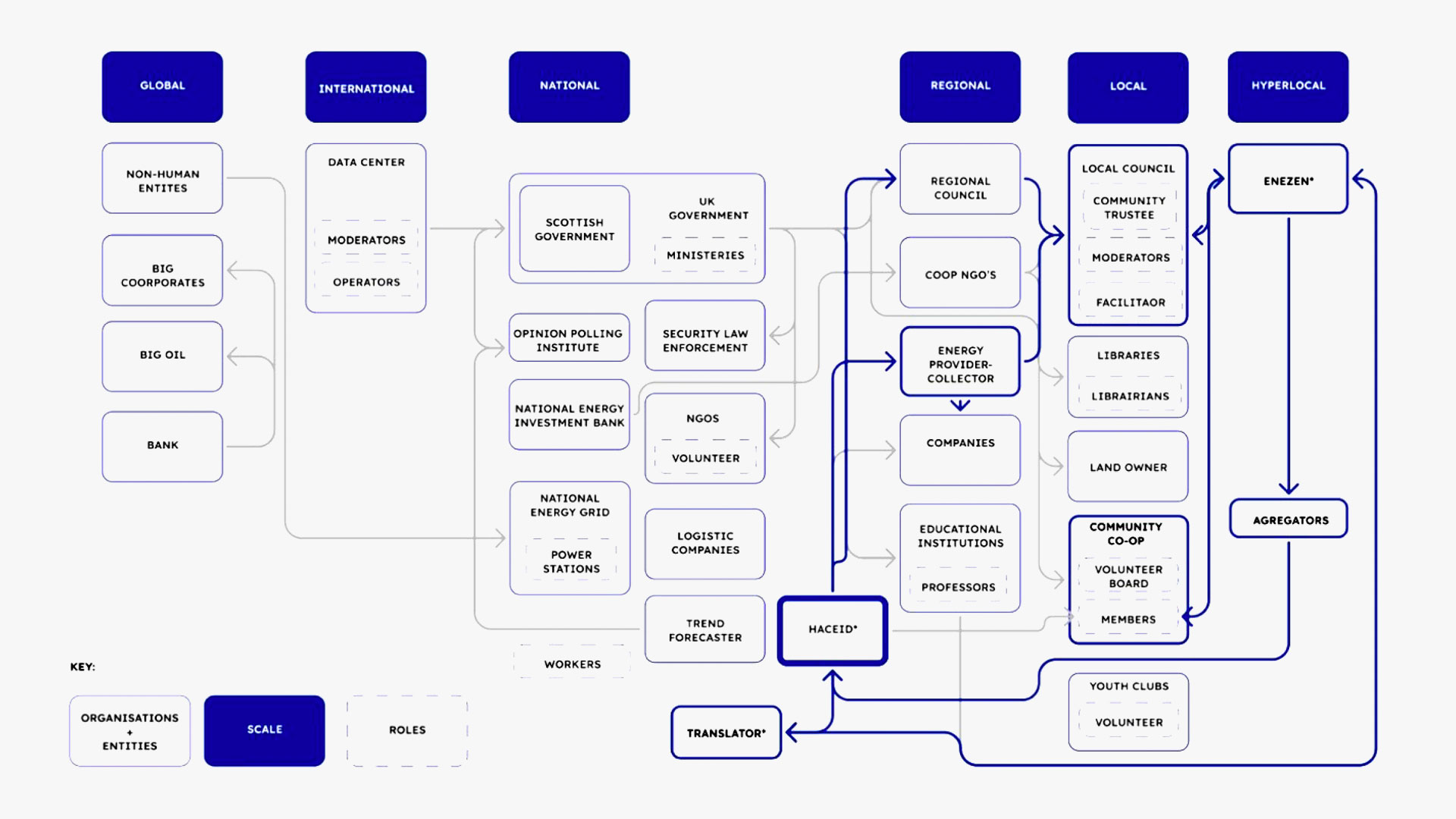
They make the case that design practices centred around making change are evolving. New roles and new terms of reference, frameworks and practices are well documented to drive more inclusive and ethical approaches formalised in design discourse. What is less well established is how to enable design students to engage and design with MtH and multiple kinds of intelligences.
Creating collaborative futures is undertaken by final-year MEDes students. The brief centred on the future of sustainable energy through harnessing Human and Artificial Collective Intelligence for Decision-making (HACID) technologies. The goal was to create a blueprint detailing a range of future system-scenarios backed up by material and digital prototypes. The underpinning question was how to design for renewable energy infrastructure decision-making in ways that centre collective and plural intelligences. The students imagined a future energy system for 2035, a neighbourhood cooperative model. The prototypes included physical touchpoints to help support decision-making and energy literacy. The students expanded the HACID framework to HACEID to help shift towards an "ecology of practice as a dynamic eco-civic system where human and non-human technological entities interact as interdependent agents".
What stood out throughout this approach was how the causal layered systems mapping employed in the process revealed environmental complexities. A lack of care for the ecosystem was revealed in relation to the placement of renewable energy infrastructure. Biodiversity-supporting habitats were removed in order to make way for large-scale wind farm installation, and in some instances, wind turbines were having effects on migrating bird pathways. The HACEID framework that students introduced can help shed light on the consequences and knock-on effects of complex decision-making, which might seem environmentally sound. Implementation could be designed in ways that pose less environmental risk at a hyper-local level, which can, in turn, have a knock-on effect nationally.
Conclusion
MtH design as a field is extremely broad and includes many communities of practice. Mathilde Gouin's exploration invites participation and collaboration in exploring how we might form affinities for MtH. Some of the methods reminded me of Zach Comozzi's earthbound prototyping, which proposes we design with self-originating materials or document nature only using what it supplies to us. The frank and at times humorous discussion by Alia Parker and Nina Williams demonstrates how out of sync and uninterested mycelium is with the temporal demands of capitalist production or turnover time. Their work also highlights how working durationally with living organisms is very different to working with controlled non-living properties or materials in MtH design, which suppresses the incommensurable durations that arise from working with living non-humans. Marianne McAra, Zoë Prosser and Kirsy Ross discuss innovations by MDeS students who insist on the inclusion of the ecological, reframing contexts as eco-civic to enable more ethical problem solving and decision making in relation to renewable energy transitions.
..............
Dr Carol Breen is a senior lecturer in graphic design and communication at the Cardiff Metropolitan University School of Art and Design.
..............
Centre for Collective Intelligence https://www.nesta.org.uk/project/centre-collective-intelligence
Alia Parker https://www.aliajaneparker.com
Mathilde Gouin https://www.mathildgouin.com
Design + Posthumanism Network, More-than-human manifesto https://designandposthumanism.org/archives/2097
Papers
Camozzi, Z. (2019). Earthbound prototyping: A method for designers to deepen connections to nature. In K. Fletcher et al. (Eds.), Design and nature: A partnership (pp.166-168). Taylor & Francis Group.
Mathilde Gouin, Daragh Byrne, Valentina Nisi, Nuno J. Nunes, Larissa Pschetz, Keili Koppel. 2026. Kinship Time: Designing with More-Than-Human Temporalities. In Proceedings of the Design Research Society Conference 2026 (DRS ‘26).
McAra, M., Prosser, Z., and Ross, K. (2026) Materialising Ecologies of Intelligence: learning to design with and within more-than-human systems, in Simeone, L., Gray, C. M., Verhoeven, A., de Götzen, A., Bakırlıoğlu, Y., Zohar, H., Stead, M., and Buwert, P. (eds.), DRS2026: Edinburgh, 8–12 June, Edinburgh, United Kingdom. Available at: https://doi.org/10.21606/drs.2026.2062
Tarkhanian, S (2026) 'Colonial Performances in More-Than-Human Design', Design and Culture. Vol.18, No. 2. 213-244.
Williams, N., and Parker, A. (2026) Incommensurable durations: Fungal time and the limits of attunement in multispecies design, in Simeone, L., Gray, C. M., Verhoeven, A., de Götzen, A., Bakırlıoğlu, Y., Zohar, H., Stead, M., and Buwert, P. (eds.), DRS2026: Edinburgh, 8–12 June, Edinburgh, United Kingdom. Availabe at: https://doi.org/10.21606/drs.2026.1709
Books
Abram, D. (1996) The Spell of the Sensuous: Perception and Language in a More-Than-Human World. New York. Pantheon Books
Lectures
Borrows, J (2024) Indigenous Law & the More-than-Human World [Lecture] Western University