Concern Worldwide - Annual Report 2024
2025
Designed by Alessandra Ravida, Michelle Lagan and Mary Doherty at Red Dog
Account Manager: Mariana Nevado
Categories: Printed Publication / Editorial
Industry: Charitable
Tags: Annual report
An annual report designed to navigate a year of global uncertainty, balancing urgency with dignity and impact, and helping readers make sense of complex humanitarian realities at pace.
The Background
Each year, Concern Worldwide’s Annual Report must do more than document activity. It must reflect the character of the year just passed. In 2024, that character was defined by instability and compounding crises. Conflict, climate and displacement intersected across multiple regions, making it impossible, and inappropriate, to centre the narrative on a single country or event.
The report needed to reflect this complexity while remaining readable, navigable and grounded. Working within established brand parameters, the challenge was to create a clear editorial journey that could accommodate governance, financial reporting and detailed programme information, while also making space for the human stories that sit at the centre of Concern’s work.
The Idea
Rather than imposing a fixed theme, the report is held together by an underlying tension between challenge and impact. The realities faced by the organisation are presented honestly, without softening or simplification, while the life-changing outcomes of its work are given equal weight.
This balance becomes the report’s guiding thread. Visually and editorially, moments of intensity are countered by moments of clarity and focus. Stories are not framed as isolated successes, but as human experiences unfolding within wider systems of support and constraint.
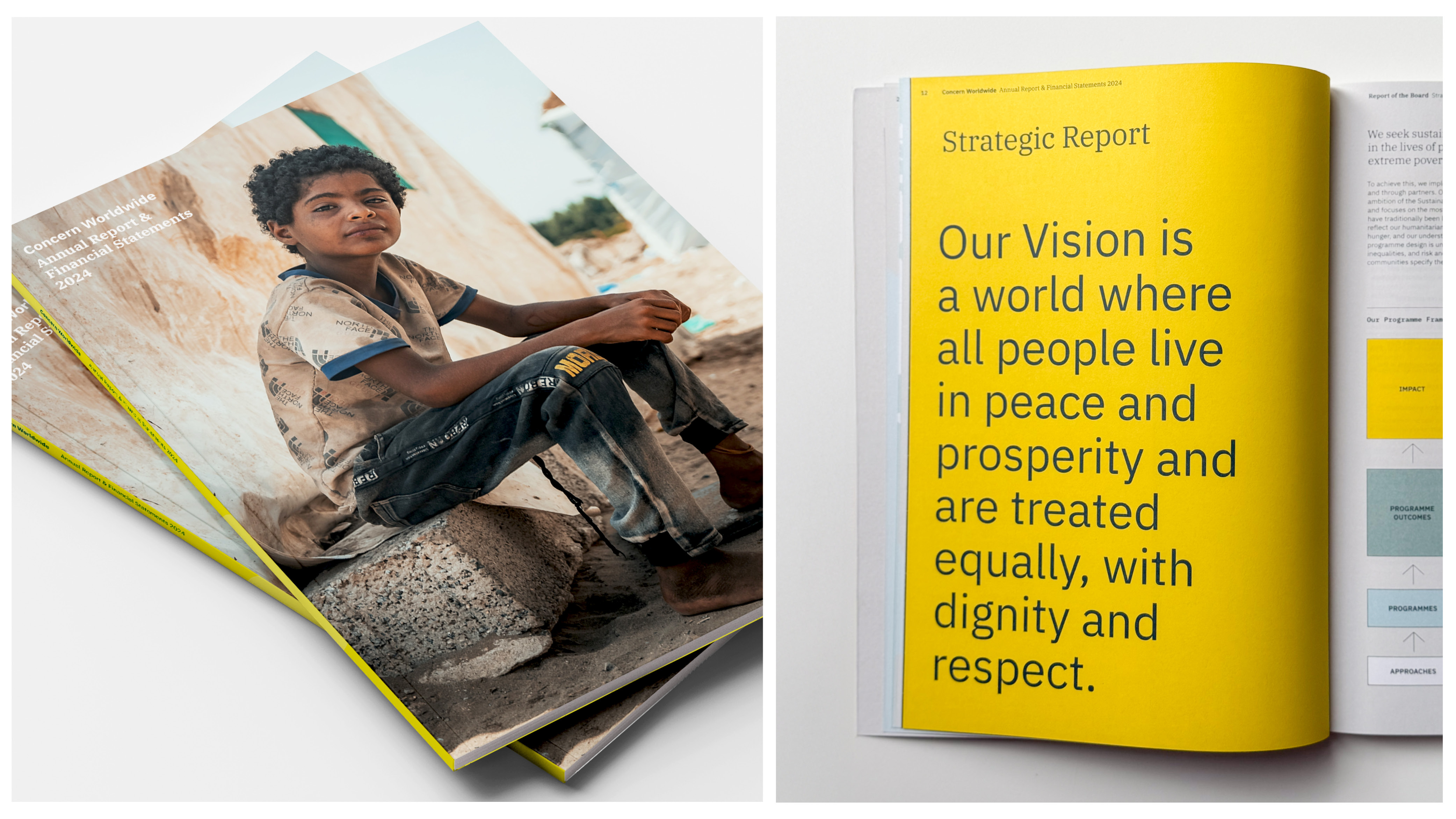
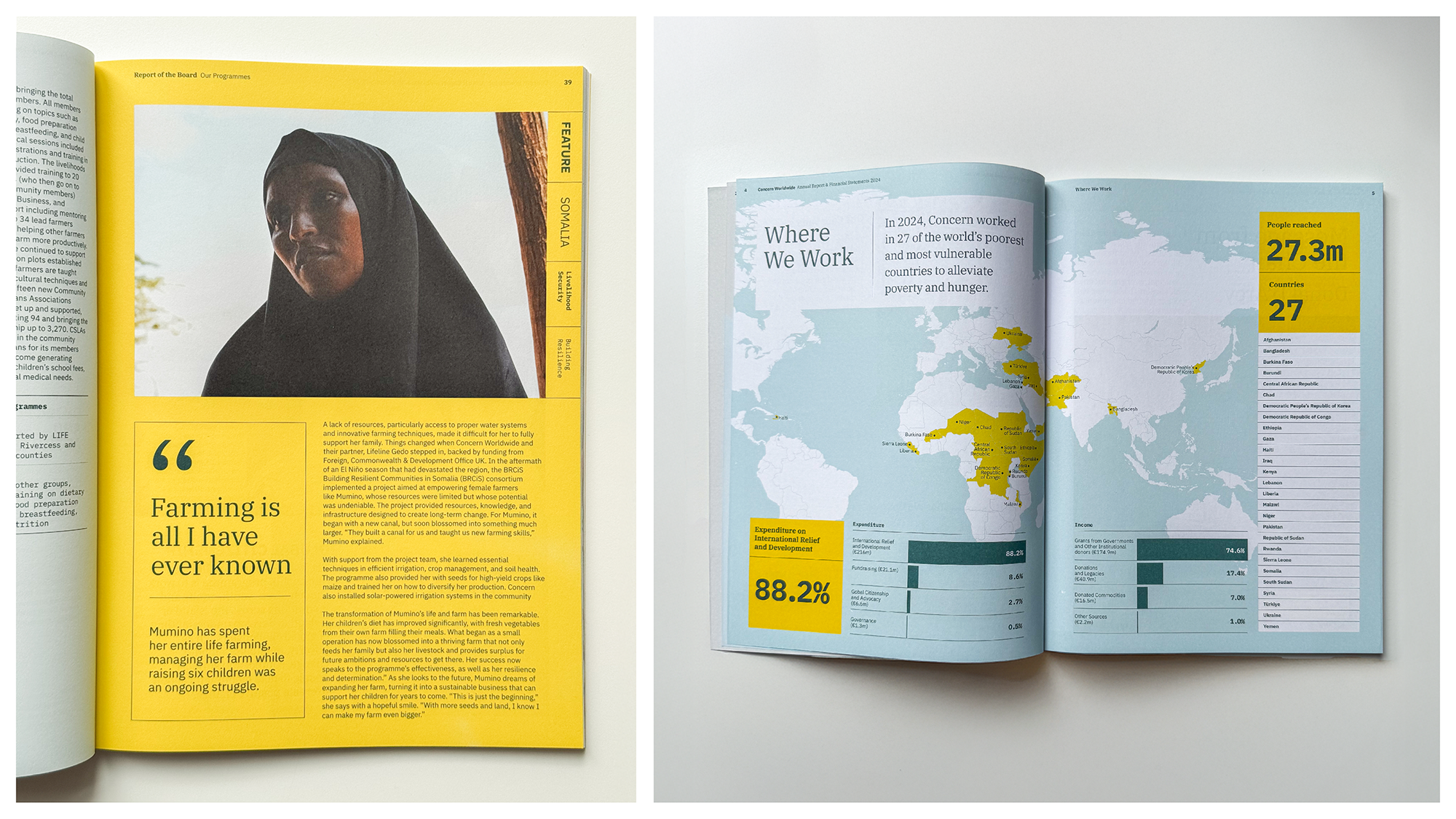
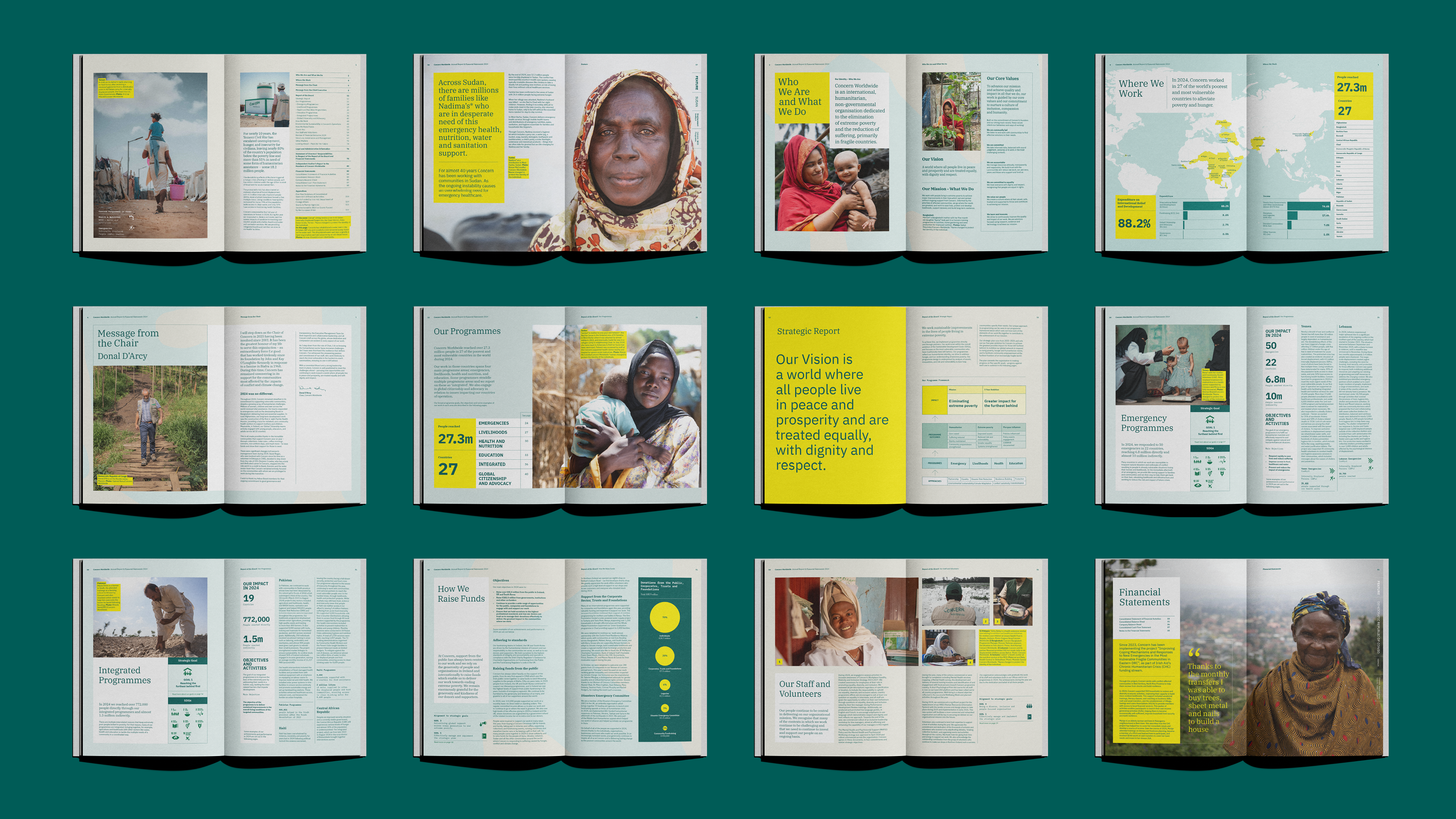
Yellow is used sparingly as a device for emphasis. It signals impact and draws the reader’s attention to key stories, statistics and voices, particularly within feature sections where individuals speak from their own perspective. Used this way, it becomes a marker of presence rather than optimism, highlighting moments of agency and change within difficult contexts.
Execution
The report is approached as an editorial object rather than a purely administrative document. Layouts borrow from magazine publishing, using pacing, hierarchy and contrast to guide the reader through complex material with intention and care. This treatment makes the content more engaging without diminishing its seriousness, allowing difficult realities to be held with the weight they deserve.
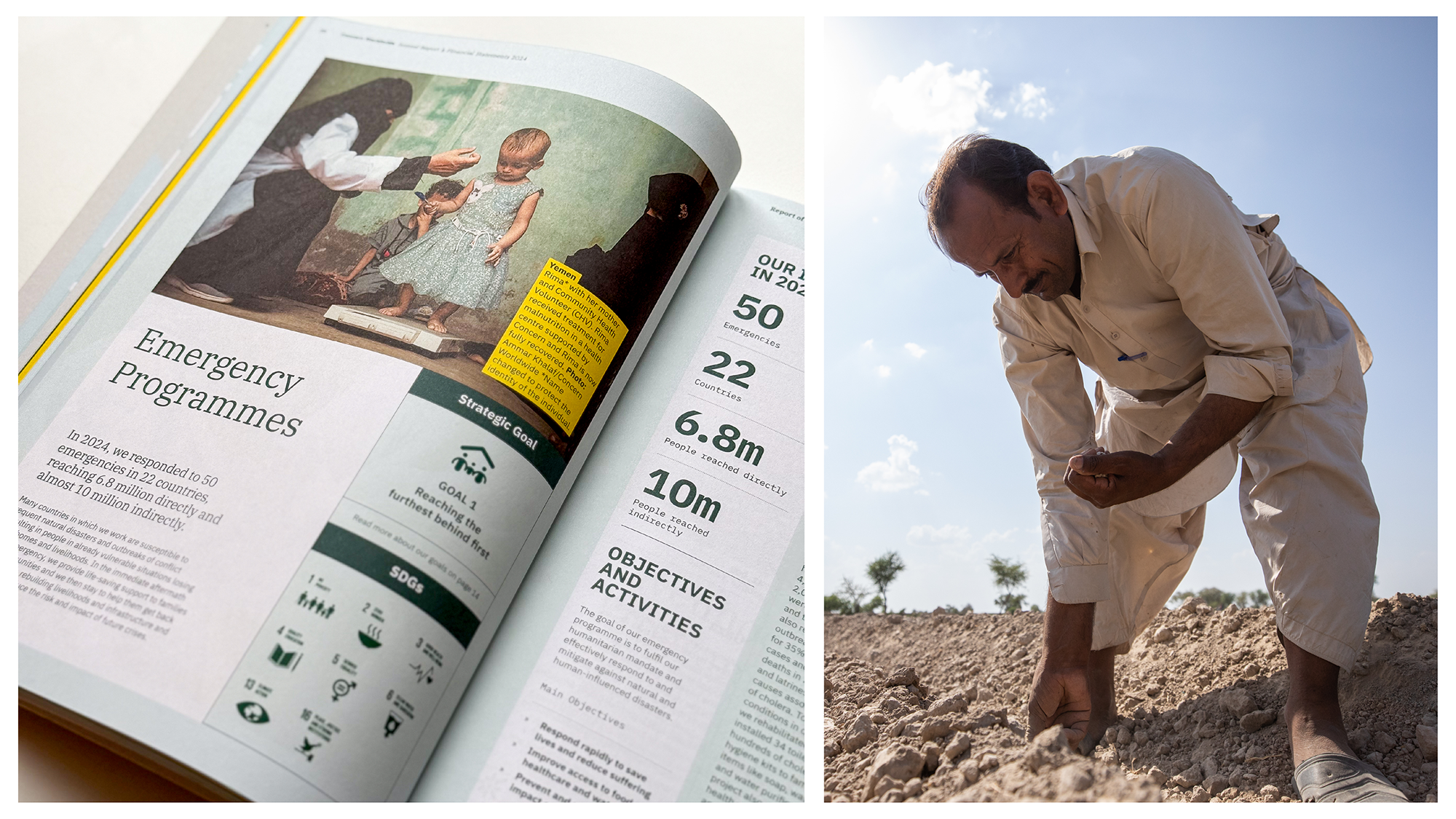
A softly tinted background runs throughout the report, creating a composed visual field that supports long-form reading and gives the pages a considered, almost archival quality. This subtle restraint allows imagery, data and narrative to sit with clarity, while elevating the overall tone of the publication.
Information design plays a central role. Pull-out statistics, icons and structured summaries are integrated editorially rather than treated as functional add-ons. These elements break up text-heavy sections and help readers orient themselves quickly, while maintaining clear links to the deeper context and detail that follows. The result is a layered reading experience that accommodates both scanning and sustained engagement.
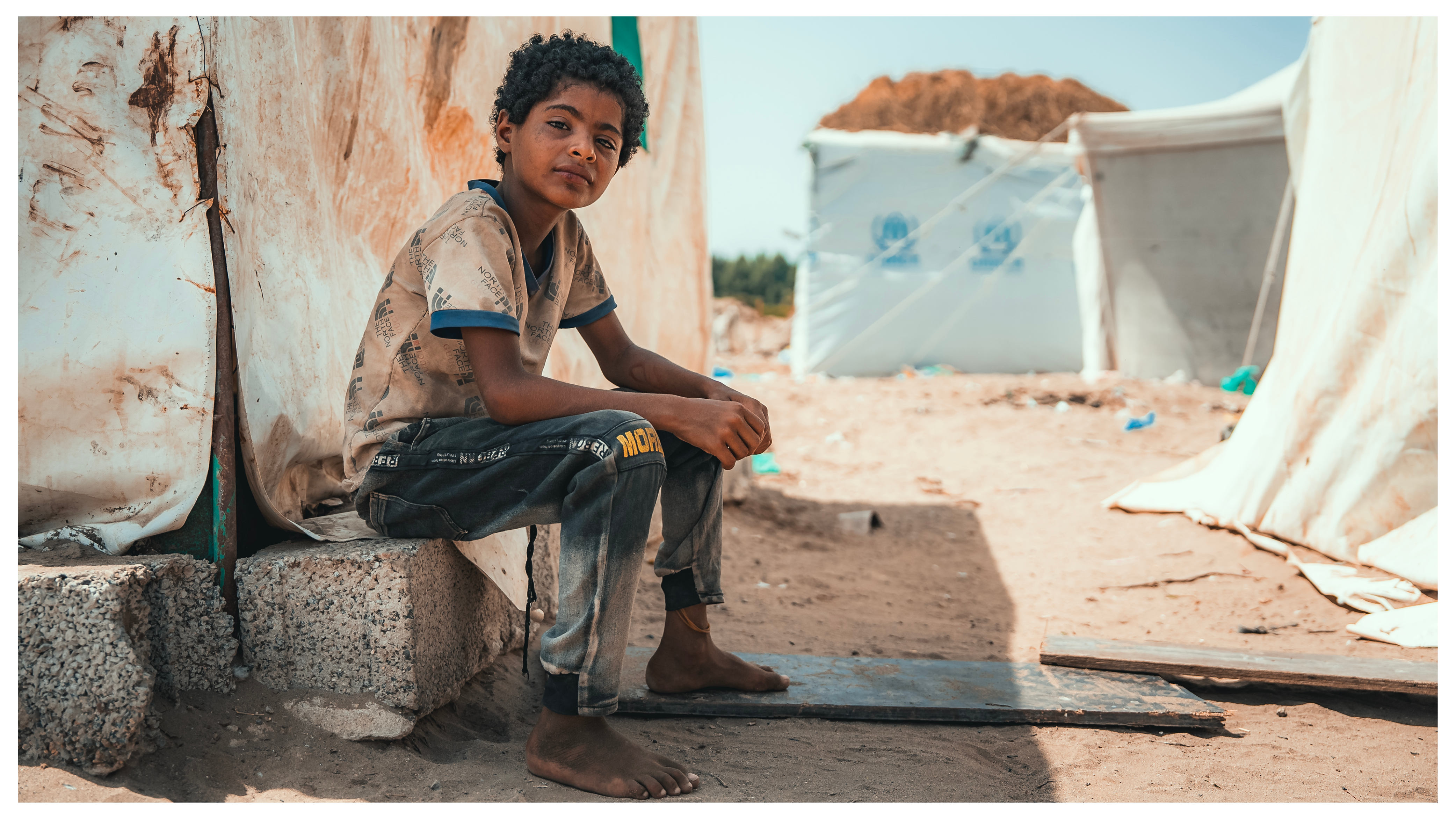
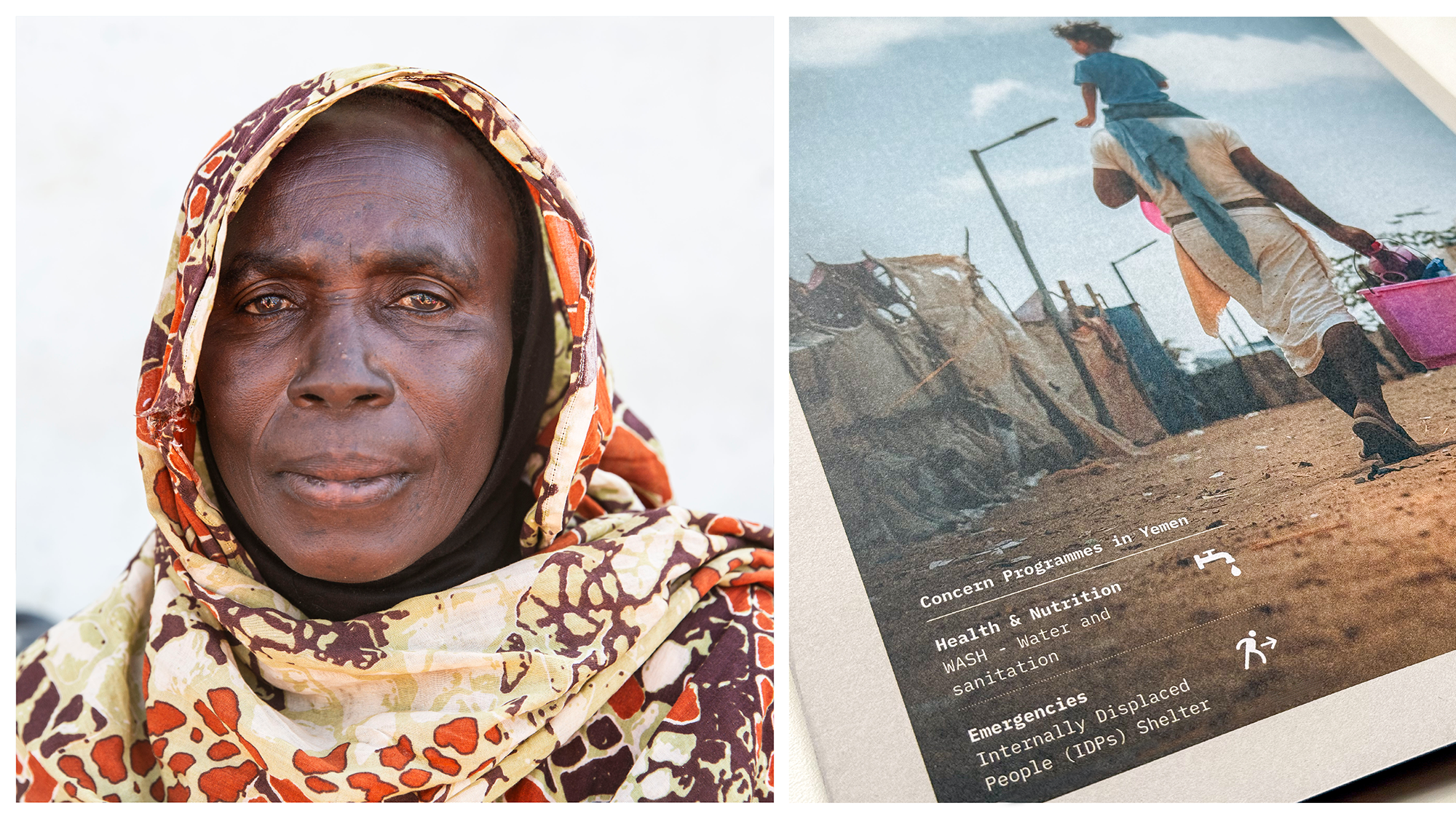
Photography is handled with the same editorial sensitivity. Images are given space to breathe, appearing as punctuating moments rather than constant accompaniment. Portraits and contextual scenes work together to communicate scale and intimacy, reinforcing the human consequences of global crises without resorting to excess or spectacle.
Across both print and digital formats, navigation is treated as part of the narrative. Section openers, visual cues and consistent structural logic allow the report to move fluidly between governance, data and human stories, giving the publication a rhythm more commonly associated with editorial publishing than formal reporting.
Why it’s working
Legibility: Complex information is structured clearly without reducing its weight. Pace: Editorial rhythm moves confidently between data, governance and human stories. Respect: Individuals are represented with dignity and agency. Focus: Impact is highlighted without spectacle or simplification. Continuity: A report that responds to the year it represents while remaining coherent and composed.