Staying with the Trouble
2025
Designed by Stina Sandström at Studio Stina Sandstrom
Printing: Plus Print
Categories: Environmental / Print / Identity / Wayfinding / Exhibition
Industry: Cultural
Tags: Contemporary art / Poster / Visual art / Art / System / Exhibition
Staying with the Trouble is a major group exhibition at IMMA, inspired by the writing of feminist theorist and philosopher Donna Haraway. Bringing together over forty Irish and Ireland-based artists, the exhibition looks at urgent ecological, social, and technological questions shaping life today. Through sculpture, film, painting, installation, and performance, the works push back against human-centred ways of thinking and suggest other ways of living—inviting visitors to reflect on the present and imagine more connected futures.
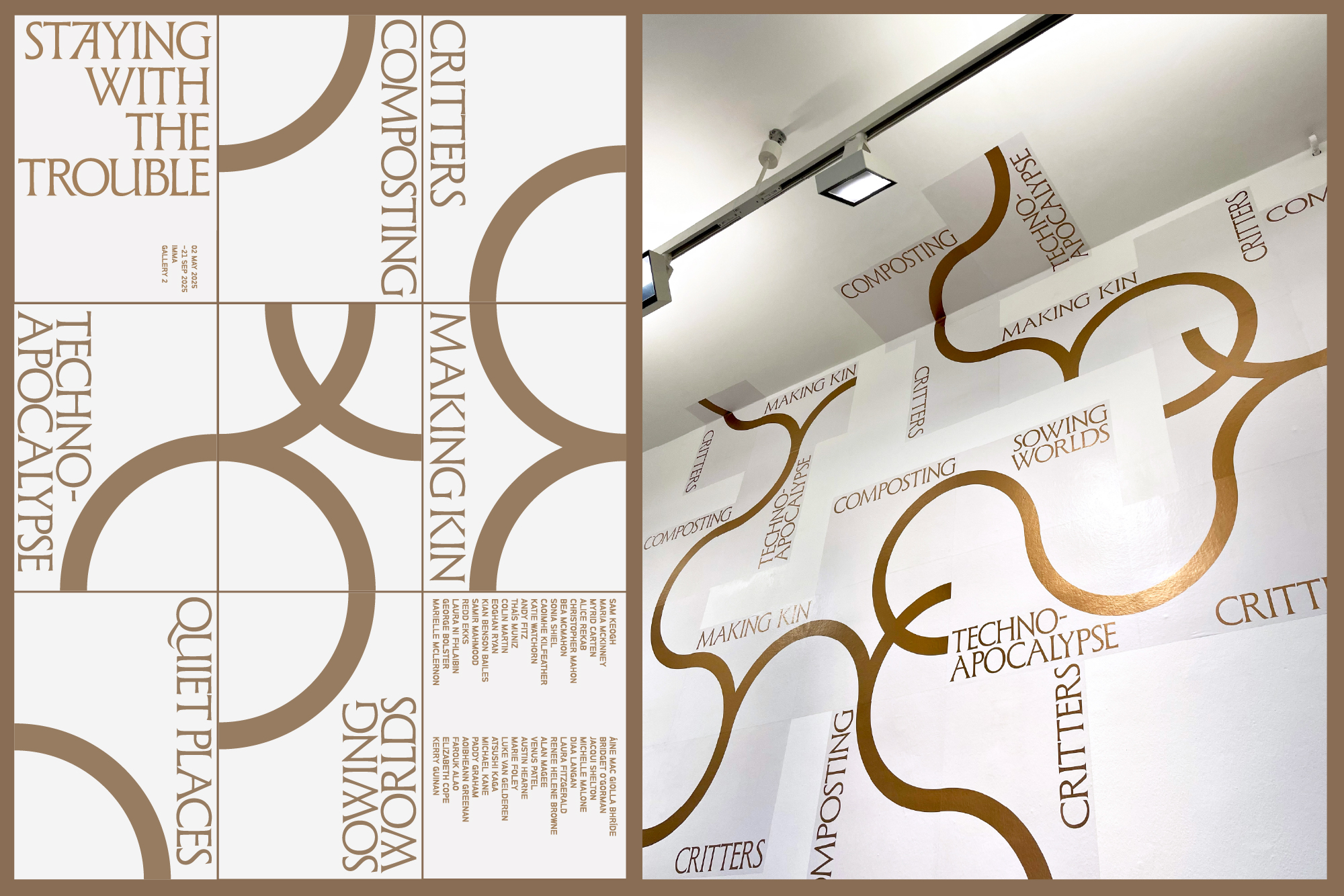
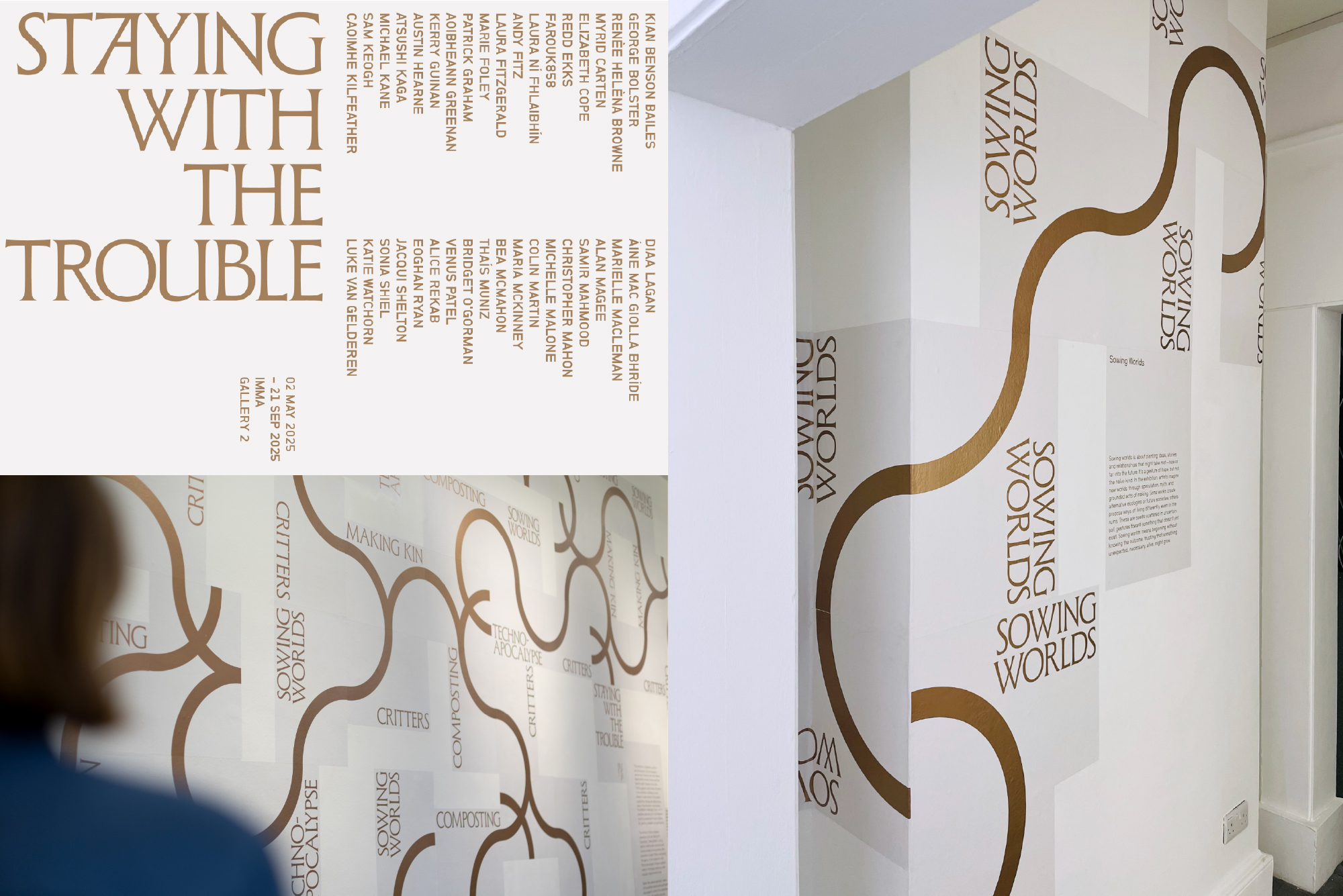
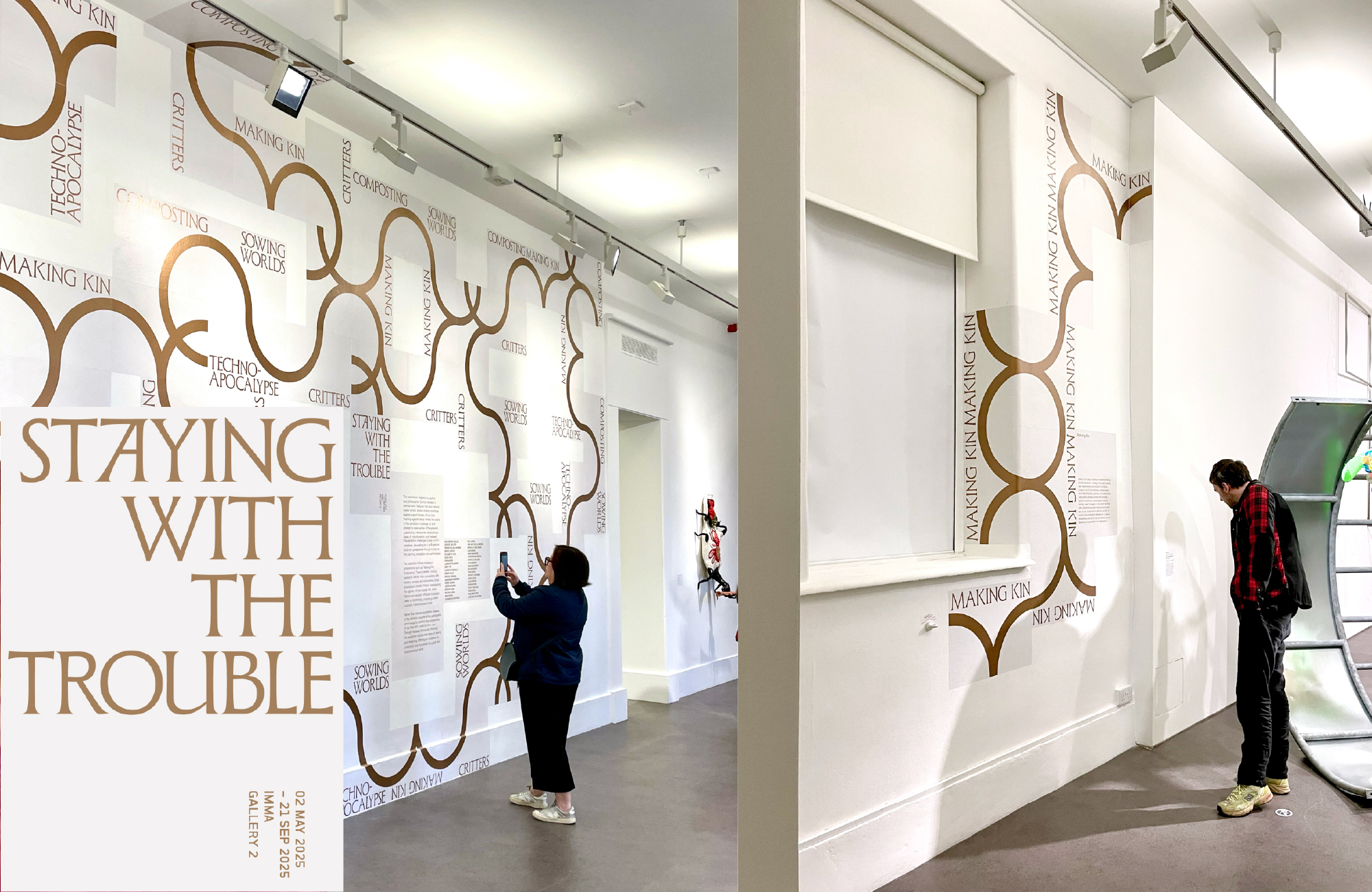
The exhibition design illustrates Haraway’s idea of “tentacular thinking” as a spatial graphic system. Haraway proposes tentacular thinking as a non-linear way of thinking about our relationship with the natural world that reflects natural patterns (in trees, plants, mycelium, root systems, tentacles), follows several paths of inquiry and allows for entanglement and connections.
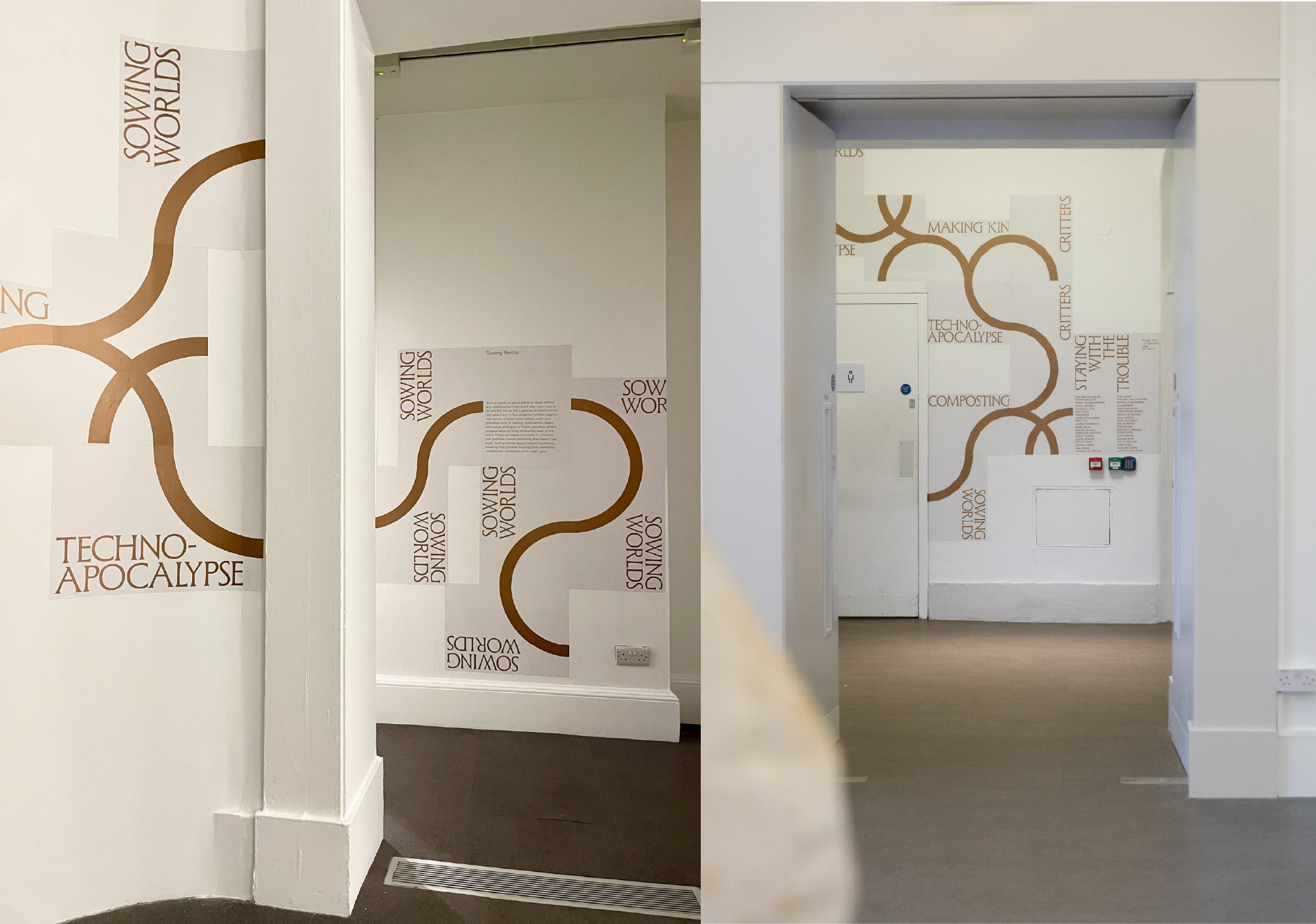
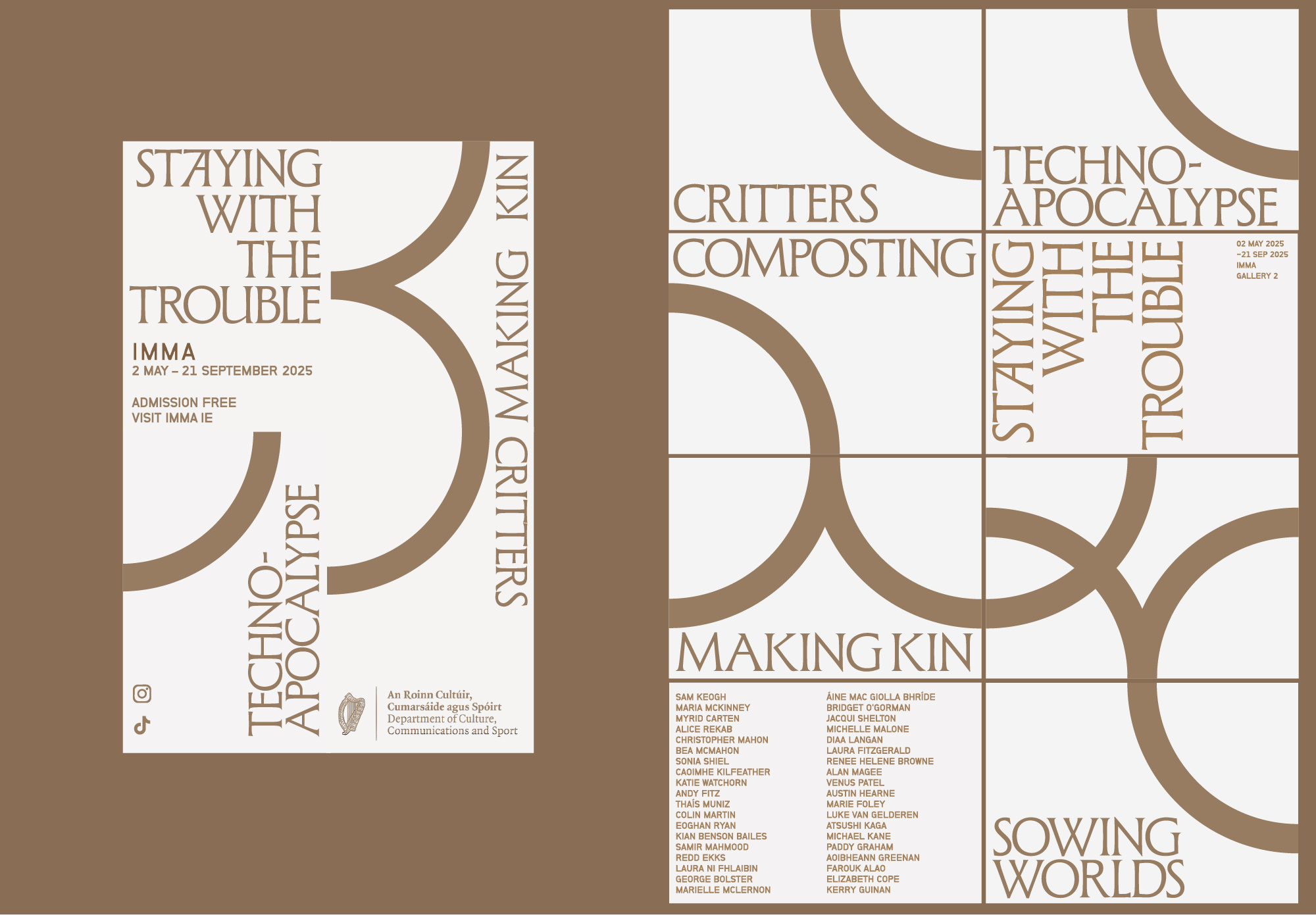
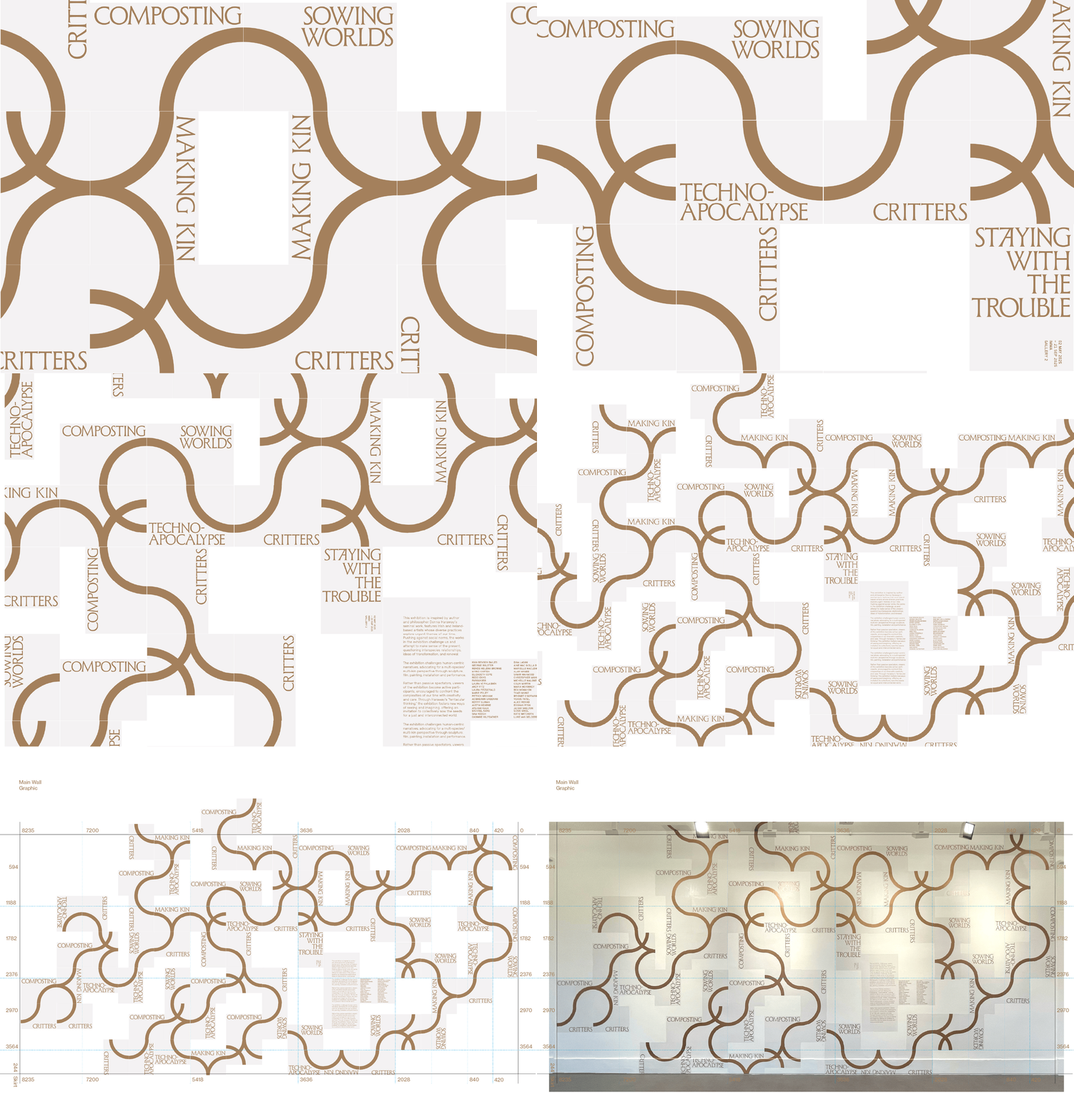
At the heart of the design is a modular series of A2 posters. Arched paths printed in metallic bronze ink connect with the path on the next poster and the next, so that when installed together, a maze forms. Printed on thin paper and wallpaper-pasted directly onto the gallery surfaces, the lines cross doorways, corners, and architectural thresholds. The paths line up, split, and branch out, creating new routes across the walls and turning the installation process into a game, (reminiscent of Ken Garland’s Connect) of responding to the architecture and creating the most alluring paths through it.
Each poster is linked to one of the exhibition’s five themes, or “tentacles”: Making Kin, CompostingSowing WorldsCritters, and Techno-Apocalypse. These tentacles act as wayfinding points, offering visitors clear introductions into different sections of the exhibition. The system brings clarity without setting a fixed route, encouraging visitors to move through the exhibition intuitively and make their own connections.
While visually bold, the approach is light in its material use, relying on adaptable, wall-based graphics rather than heavy interventions. In this way, the exhibition design reflects the exhibition itself, embodying tentacular thinking in form and its making.